
A complete, tiered leadership system.

10 easy-to-follow modules, powerful for change.
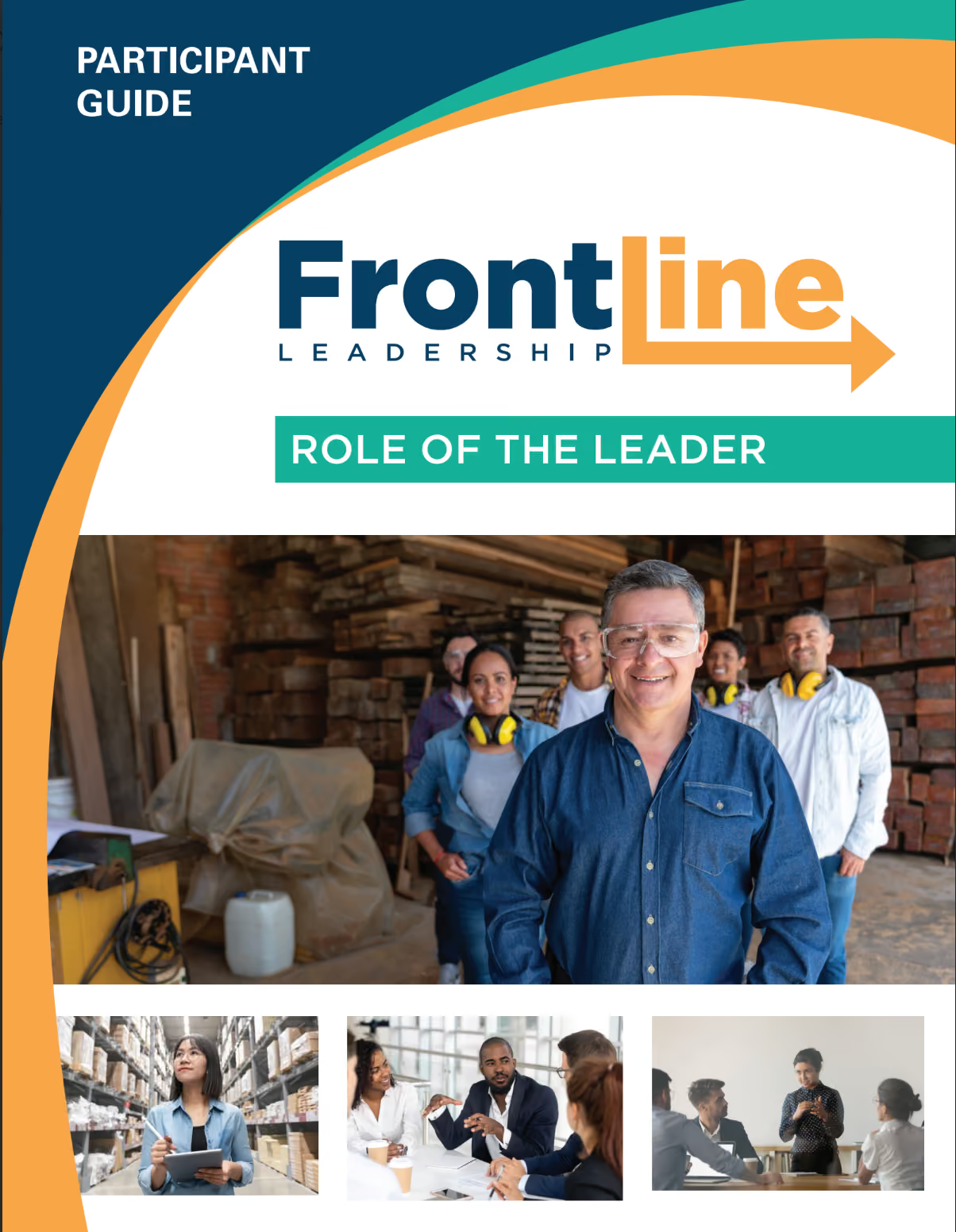
MODULE 01
Role of the Leader.
The day someone gets promoted, everything changes. They’re no longer doing the work. They’re responsible for getting it done through other people. Most supervisors never get told what that actually means.
Module 02
Managing Personalities.
Every person on your team is wired differently. The communication style that works for one person backfires with the next. Most supervisors learn this the hard way over years. We compress it into one module.
MODULE 03
Motivating Employees.
Pep talks don’t motivate. Pizza parties don’t motivate. Knowing what actually drives each person, and creating the conditions for them to do their best work, does.
MODULE 04
Teamwork & Collaboration.
A group of people doing similar work is not the same as a team. Real teams have trust, shared goals, and accountability to each other. Most frontline groups never get there because nobody builds it intentionally.
MODULE 05
Communication.
Most leadership failures are communication failures. Unclear expectations. Unspoken concerns. Avoided feedback. The difference between an effective supervisor and a struggling one is often just the conversations they’re willing to have.
MODULE 06
Managing Performance I.
Performance management is where most supervisors freeze. They want to be liked. They avoid the hard conversation. They wait too long. The result: the underperformer keeps underperforming and the high performer wonders why nothing changes.
MODULE 07
Managing Performance II.
Module 6 is about getting underperformers up to standard. This is about everyone else. Delegation that builds capability. Accountability systems that don’t require constant checking. Developing top performers so they don’t quit out of boredom.
MODULE 08
Coaching for Commitment.
Telling someone what to do gets you compliance. Coaching them to figure it out gets you commitment. This is the shift from being a manager to being a leader.
MODULE 09
Managing Conflict.
Conflict avoidance destroys teams faster than conflict itself. The supervisor who dodges the hard conversation isn’t keeping the peace. They’re letting tension simmer until it explodes.
MODULE 10
Leading Change.
Change is constant. New systems, new leadership, new strategy, new market conditions. The best frontline leaders don’t just survive change. They help their teams move through it without losing momentum.
Take the materials with you.
Real samples from the program. The workbook, the learning aids, the assessment, and the manager summary. No form required.
What does training actually look like
Not a lecture. No slide-reading marathons. Here’s what your team will experience.
Morning
The facilitator opens with a scenario every supervisor recognizes: a conversation they’ve had a hundred times on the floor. This isn’t the training they sat through last time.
Mid-morning
In the activities, they practice exact scenarios they have out on the floor. Activities vary from small group case studies, role plays, interactive team building, just to name a few. In each activity, the room debriefs. Not what went wrong. What worked.
Lunch
The training keeps going during breaks and after the class ends. Supervisors from different departments comparing notes. "I tried that last month." "Here's what happened when I finally had that conversation." This isn't just skills. It's a network.
Afternoon
Frameworks for the moment a conversation gets hard. By end of day, nobody is checking their phone. For most people in the room, this is the first time anyone actually taught them how to lead.
Built on the floor. Refined for 16 years.
This isn’t a framework written in a conference room. Here’s where it comes from.
Every module started as a problem a supervisor actually brought to us, not a theory from a textbook.
Twenty-five years. 15,000+ leaders. 300+ companies. Each round sharpened what works and cut what doesn’t.
Across 22 industries, the examples, role-plays, and language get rebuilt for the people in the room.
And it keeps growing. Clients asked for more, so the core ten modules are now expanding into a complete, tiered system.
What changes after Front Line Leadership.
I freeze when I have to address performance.
I address performance directly. With a framework, not ignoring it or blowing up.
I communicate one way and hope it lands.
I communicate across personality styles. It lands.
I tell people what to do and check in later.
I coach. They learn. They commit.
Trust is something I’m hoping for.
Trust is something I build on purpose. With tools.
Every team in our org leads differently.
One shared leadership language. Across every team.
Change happens to my team.
I lead my team through change. We come out stronger.
“ We implemented Front Line Leadership as our foundational management/leadership program. Feedback has been extremely positive, and our leaders are embracing all the concepts, tools, and behaviors.“


Ready to see how it’s delivered?
Five delivery formats. One set of outcomes. We’ll help you pick the right fit.